How to Target Specific IP Addresses in Digital Advertising?
News26/12/2025, 17:094 min read
How to Target Specific IP Addresses in Digital Advertising
Advertising on digital media has become more advanced. This has brought a new level of precision to the way brands are able to reach audiences, providing an opportunity for messages to be given to the right people, at the right time.
Another targeting technique that is of a more sophisticated level is IP address targeting. This system enables advertisers to target specific computers, devices, or networks.
Focusing on unique IPs can allow businesses to optimize campaign effectiveness, minimize ad waste, and target quality prospects. In this guide, we’re going to tell you a bit about what IP targeting is, how it works, and how to use it.
Also Read: Fix “Windows Could Not Detect Proxy Settings”
What is IP Address Targeting?
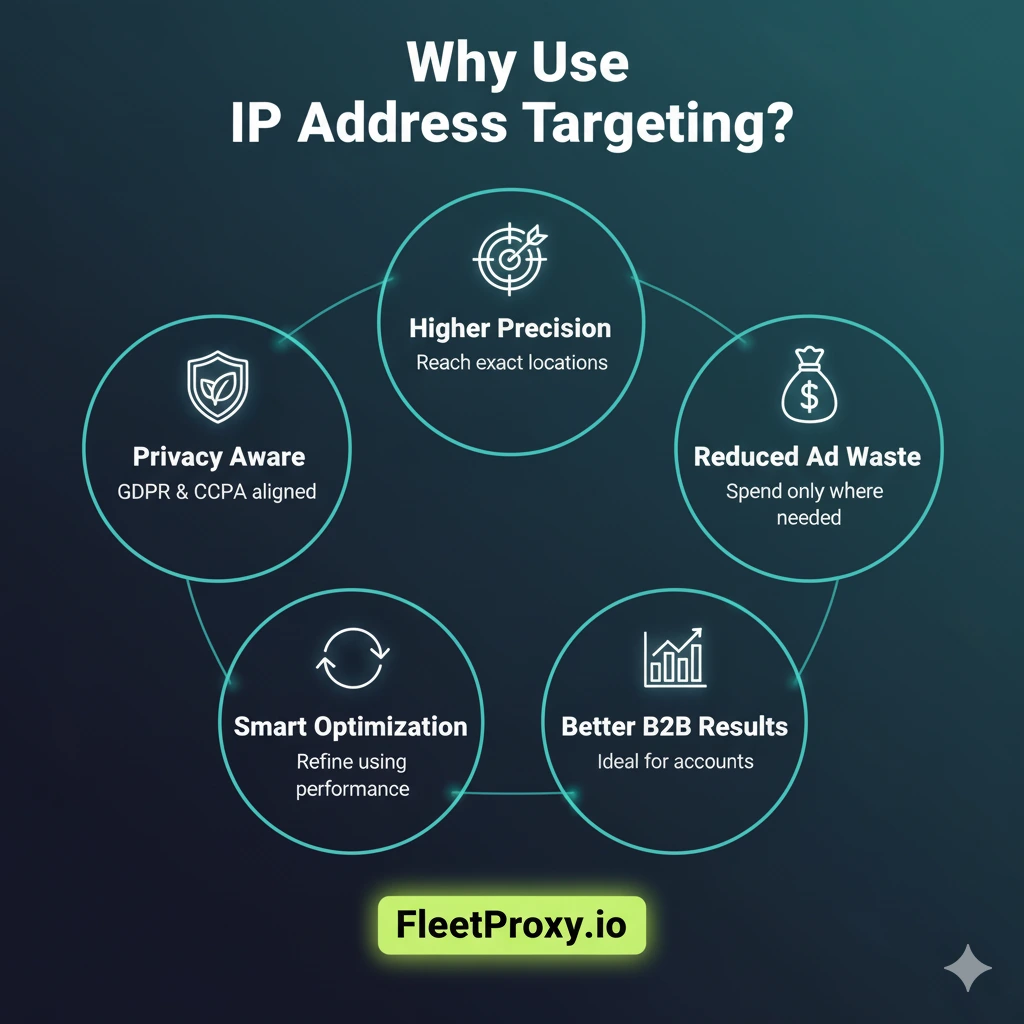
An IP address is a number that identifies a device on the Internet. If you’re targeting certain sets of IP addresses, your ads can only be served to devices that are connected to said IPs.
It’s a tactic that many B2B companies, chains, or any entity wanting to contact individual offices, customers, or locations use.
Whereas demographics and interests are very broad, IP targeting enables you to put an advertisement right where it is most applicable.
How IP Targeting Works?
How IP targeting works is that a device’s IP address is associated with an advertising network. Ad tech platforms such as Google Ads, LinkedIn Ads, and some demand side platforms (DSPs) enable advertisers to include or exclude particular IP addresses from their campaigns.
Basic Workflow
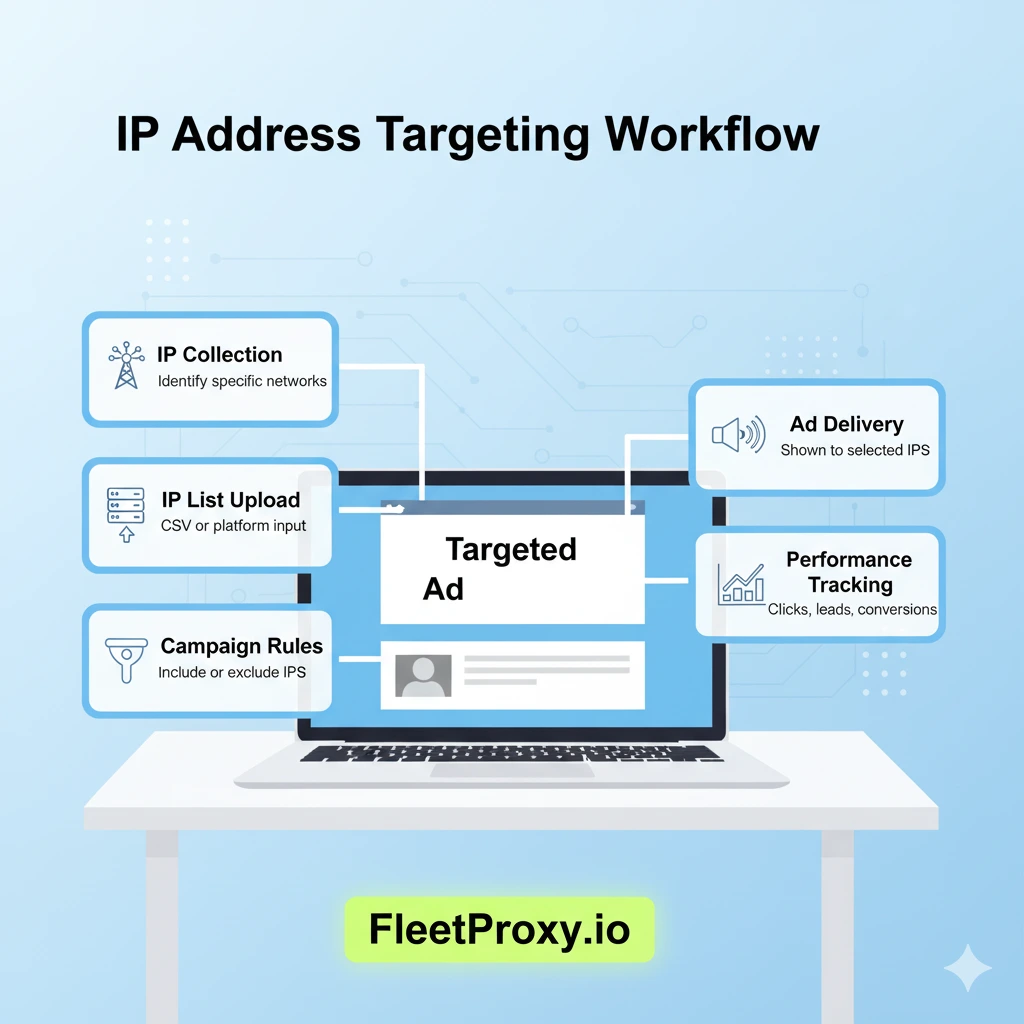
• Gather up the IP Addresses: Figure out which IPs you are trying to hit. These might be your customers you already have, partners, or premises you know.
• IP List Upload: Add the IP addresses listed to your advertising platform. Some tools take CSV files or read directly from an input.
• Specify Campaign Rules: Want to allow or deny them to these IPs. You can also layer on additional parameters such as location or type of device.
• Launch Campaign: Ads will be served only on devices connected to the IP addresses you selected.
• Track Performance: Measure impressions, clicks, and conversions from IP targets to refine campaigns.
Recommendations for IP Address Targeting
Although IP targeting can be effective, it has to be done the right way. Here are some best practices:
Maintain an Updated IP List
IPs can change a lot, especially for mobile devices or dynamic networks. Check your list often in order to avoid mailing to dead addresses.
Combine with Other Targeting Options
Take your campaigns to the next level with other targeting, like device type, geographic location, and demographic. This makes the result general enough while still being precise.
Avoid Over-Targeting
Hitting a low number of IPs can narrow the campaign’s reach and also decrease the effectiveness of ads. Strike a balance between accuracy and reach for relevant results.
Use Exclusion Lists
Do not want competitor IPs or out-of-network IPs to waste your spend.
Monitor Campaign Performance
Monitor impressions, clicks, conversions, and cost per acquisition (CPA) by IP. Refine your targeting using the data of what’s working.
Respect Privacy Regulations
Make sure that your IP targeting alignment is compatible with privacy laws such as GDPR and CCPA. Don’t use personal data in a way that would breach privacy laws.
Test and Refine Campaigns
Test on a small scale, then ramp up campaigns. You'll want to test which IPs produce the most return, then tweak your strategy from there.
Also Read: How to Track an IP Address?
Common Challenges with IP Targeting
IP targeting is also accurate, but has its own set of challenges:
Dynamic IPs
Several ISPs assign dynamic IPs, which change with regularity, making it challenging to target consistently.
Limited Quantity
There are only a few IPs available to target, and so campaign scale may be limited.
Privacy
IP data misuse may raise privacy or other legal concerns.
Mobile Networks
Devices on mobile networks tend to use shared IPs, and targeting at an individual level becomes more unreliable.
Knowing about these challenges will help you to have realistic expectations on how your campaign will perform.
In a Nutshell!
With IP targeting, you zero in on specific addresses, like the households that can afford to buy your product. It is most effective for B2B campaigns, account-based marketing, or localization deals.
FAQs
Q1: Which businesses are best suited for IP targeting?
Ans: B2B companies, franchise chains, and businesses with high-value clients are likely to derive the most from IP targeting.
Q2: Can I target mobile and other devices via IP targeting?
Ans: It’s a difficult road given that mobile carriers frequently use dynamic or shared IPs. Fixed or desktop networks are less likely to disappear.
Q3: Is IP targeting legal?
Ans: Yes, under privacy regulations (GDPR/CCPA) - compliant practice.
Q4: How often should the lists of IPs be refreshed?
Ans: IP lists should be maintained up-to-date, preferably on a monthly basis or whenever new clients or networks are added.
Q5: Am I able to add IP targeting with retargeting campaigns?
Ans: Yes. IP targeting plus retargeting can enhance the accuracy of your campaigns and help you reach high-value audiences with greater success.
More popular posts
Tips to Use a JP Web Proxy to Browse Japanese Websites Safely.
Have you ever clicked on a link to an exciting Japanese video, a regional news article, or a unique e-commerce site, only to be met with a frustrating error message? "This content is not available in your region." This digital barrier, known as geo-blocking, is a common hurdle for international fans of Japanese culture, researchers, and expats alike.
How much does an IP address cost in 2025?
The IP address cost in 2025 varies across regions. Larger blocks are cheaper per IP but costly overall, while smaller blocks offer more stability, clarity and security. No matter the option, understanding these trends helps businesses make smarter and more cost-effective decisions
How to Download Rarbg Proxies in 2025?
When RARBG went offline, it was like an era ended for torrent fans. RARBG was the most trusted place to get high-quality movies, TV shows, and games for years and it was free of the usual clutter and fake links.